
Fire Alarm System
Choosing the Right Fire Alarm System for Your Building
Not all fire alarm systems are equal. The right choice depends on your building size, occupancy, and budget. Sujay Fire helps you select between conventional zone-based panels and modern addressable systems where every device has a unique address for pinpoint fault and alarm location.
Category
Fire Alarm System
Zone-based detection with simple wiring — cost-effective for smaller buildings up to 5 zones
Every detector and call point has a unique address — pinpoint location to the exact device
Radio-frequency based — ideal for listed buildings and retrofits where cabling is impractical
Mix of conventional zones and addressable loops — flexible for phased upgrades
At the heart of every system is the fire alarm control panel. The panel receives information from devices designed to detect and report fires, monitors their operational integrity, and provides for automatic control of equipment and transmission of information necessary to prepare the facility for fire based on a predetermined sequence.
A fire alarm system has a number of devices working together to detect and warn people through visual and audio appliances when smoke, fire, carbon monoxide, or other emergencies are present. These detection devices and the way they are wired back to the panel are what distinguish one type of system from another.
What We Supply
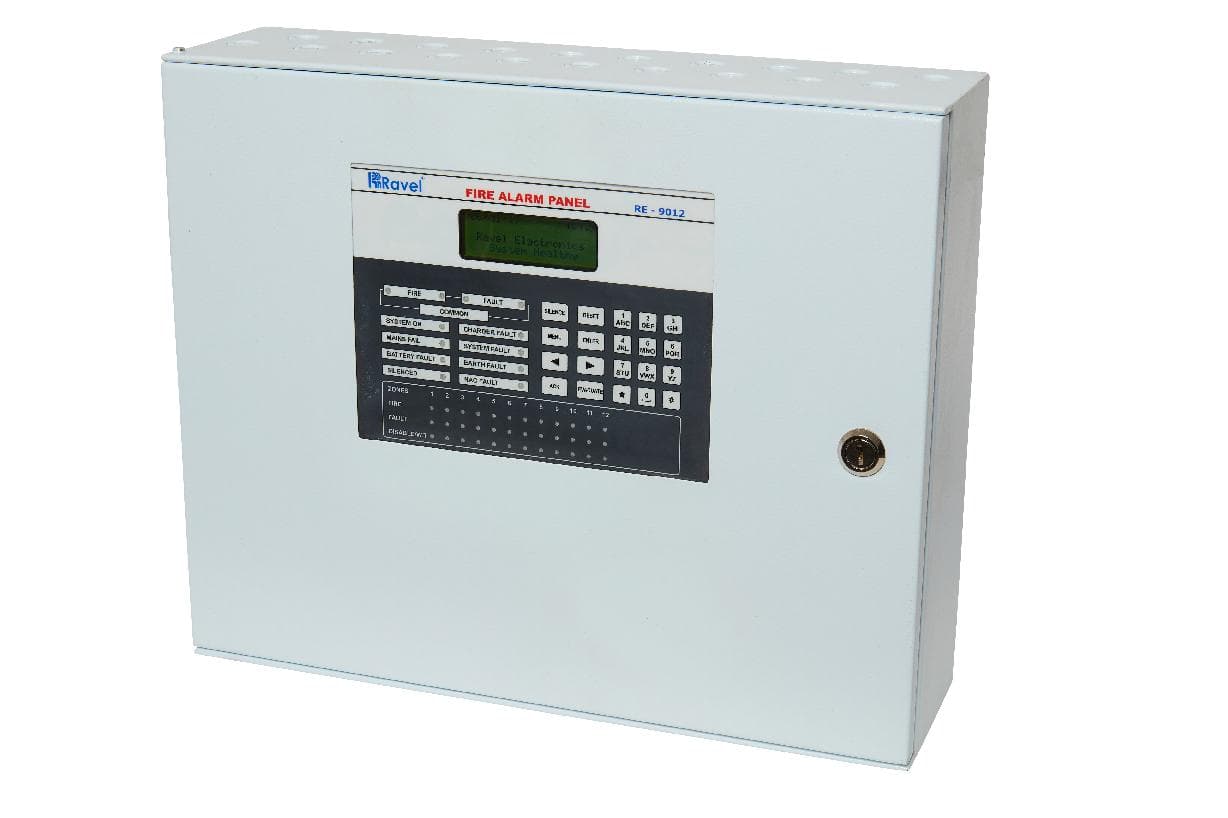
A conventional fire alarm control panel employs one or more circuits, connected to initiating devices wired in parallel. These sensors are devised to dramatically decrease the circuit resistance when the environmental influence on any sensor exceeds a predetermined threshold.
A panel typically supports 6 to 14 zones, with each zone accommodating 15–18 detectors plus manual call points and hooters — making it a cost-effective choice for smaller buildings.
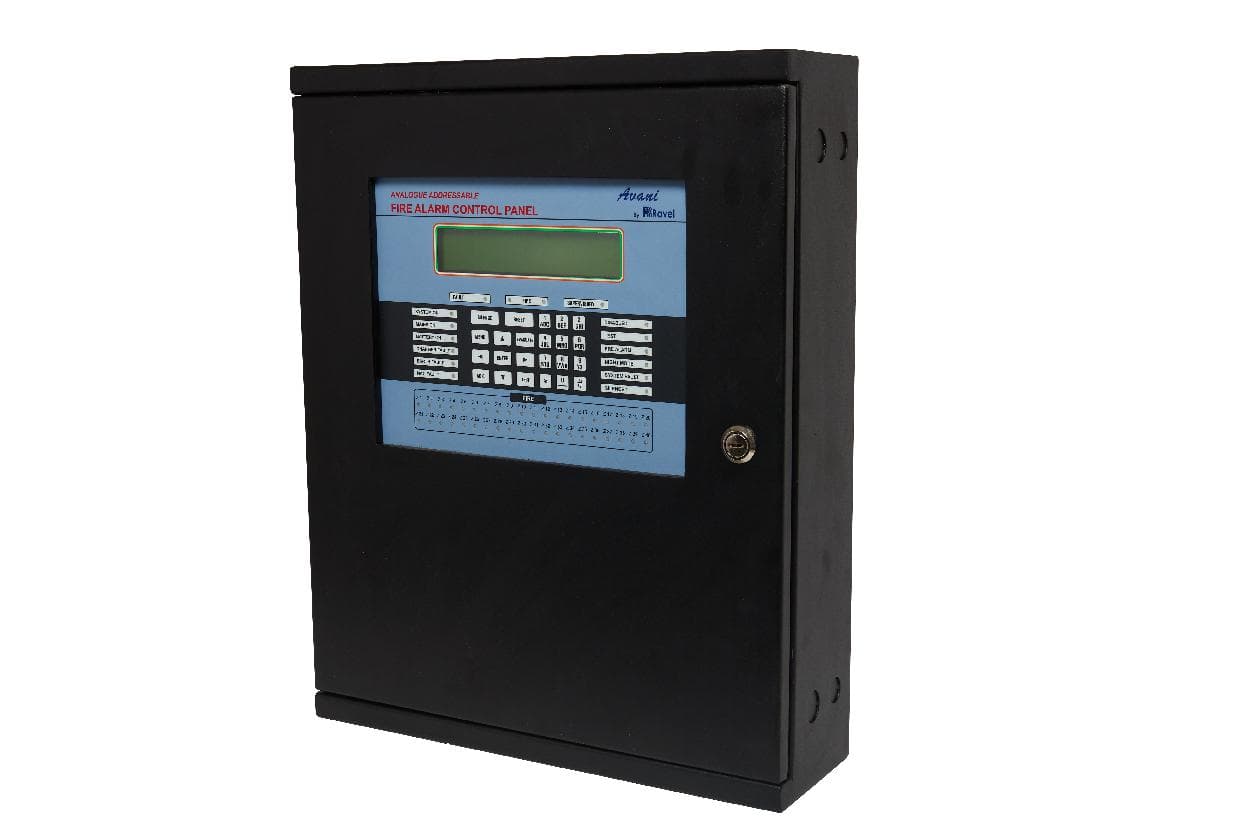
In an addressable system each detector has the ability to identify itself and report its current status. Over the years, the level of sophistication of detectors and systems has greatly increased.
These systems support multi-loop configurations — around 250 devices per loop and up to roughly 1,000 devices per panel — allowing an alarm or fault to be pinpointed to the exact device.
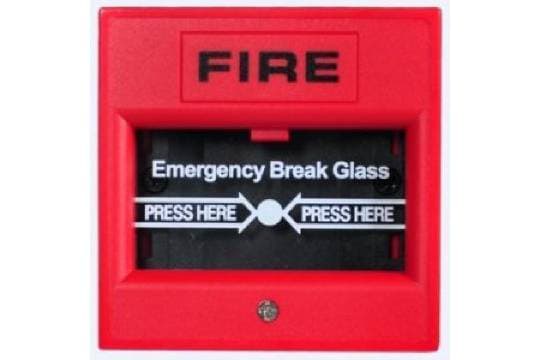
Manual call points (break-glass units) allow any occupant who discovers a fire to raise the alarm immediately, without waiting for automatic detection. They are installed along escape routes and at exits so an alarm can be initiated at the point of discovery.
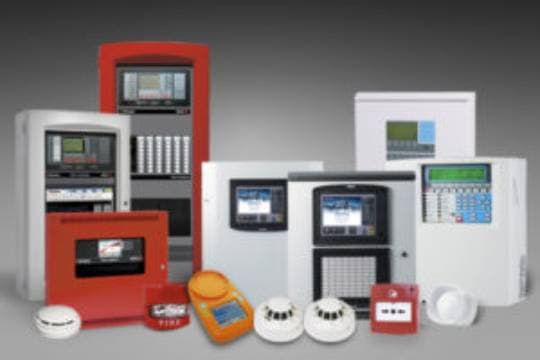
Detection is carried out by a range of devices — smoke detectors, heat detectors, dual-criteria detectors, duct detectors, carbon monoxide detectors, and beam detectors — each selected to suit the hazard and environment of the protected space.
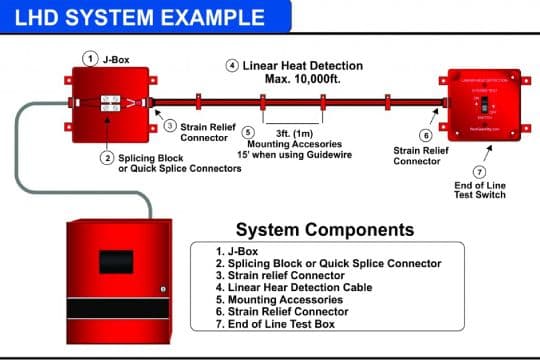
These shall be analog addressable, fixed cum rate-of-rise type, and designed to operate when the ambient temperature rises beyond a fixed temperature or if the rate of rise is faster than the predetermined rate — ideal for cable trays, tunnels, and conveyors.
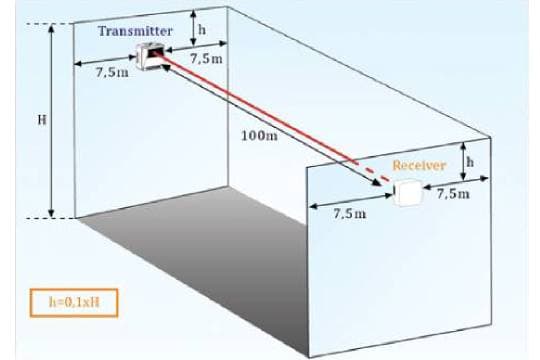
Beam detectors work on the principle of light obscuration, where the presence of smoke blocks some of the light from the beam, typically through either absorbance or light scattering. They are well suited to large open volumes and high ceilings such as atriums and warehouses.
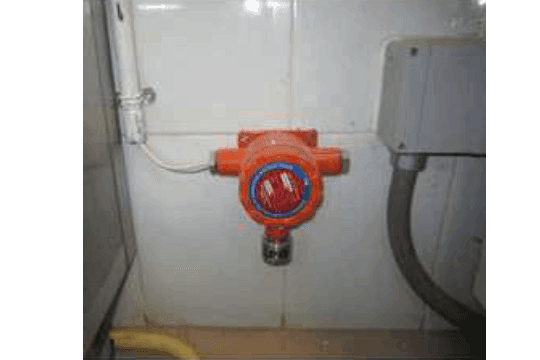
Gas leak detection is the process of identifying potentially hazardous gas leaks by sensors. These sensors usually employ an audible alarm to alert people when a dangerous gas has been detected.
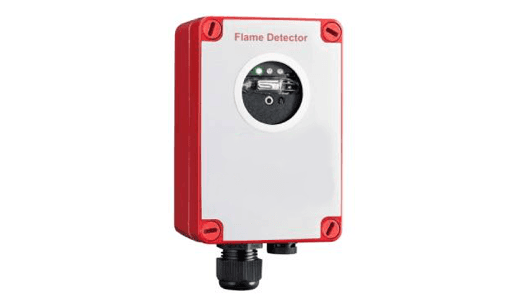
A radiant energy-sensing fire detector detects the radiant energy emitted by a flame. The response will depend on the distance between the flame detector and the fire, making these well suited to high-ceiling and high-hazard applications.
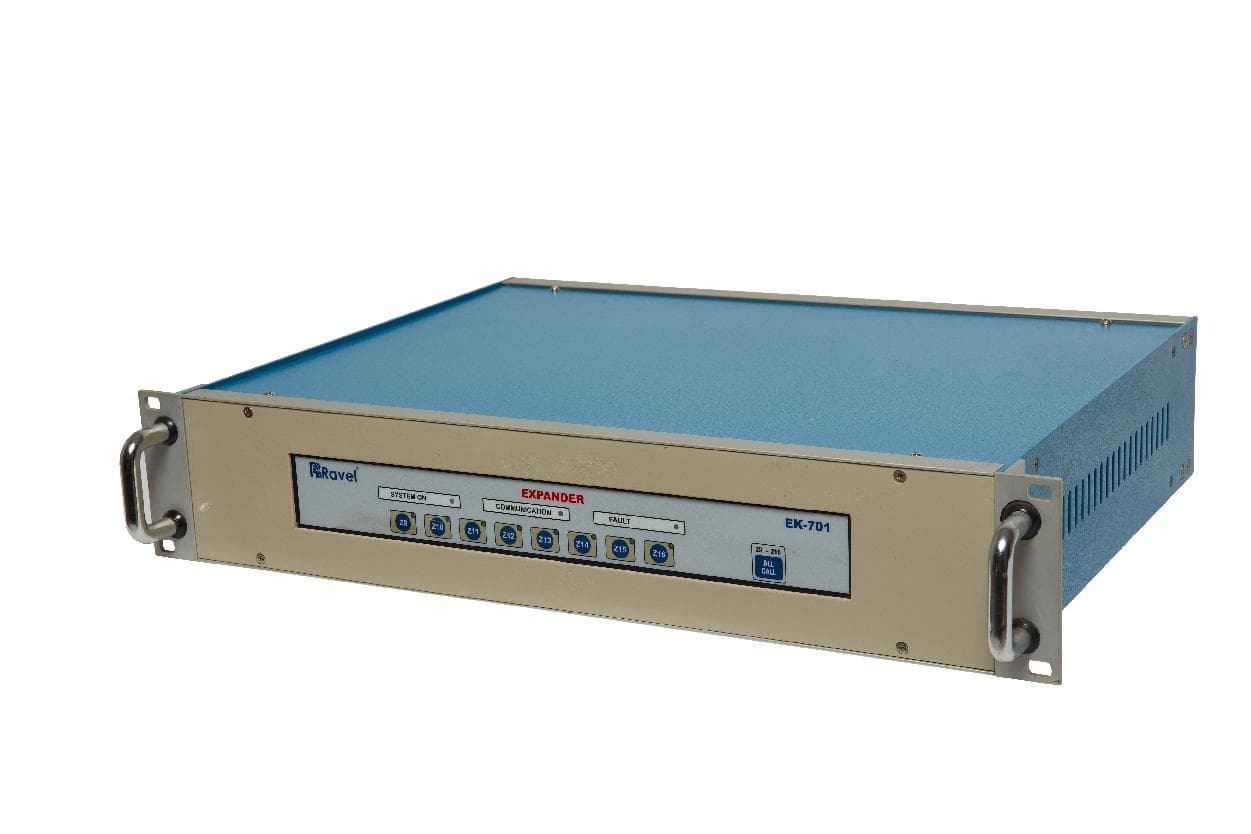
Voice communications are extensively used to provide building occupant notification during emergencies. These messages contain vital safety information that must be clearly understood by the building occupants to ensure a calm, orderly evacuation.
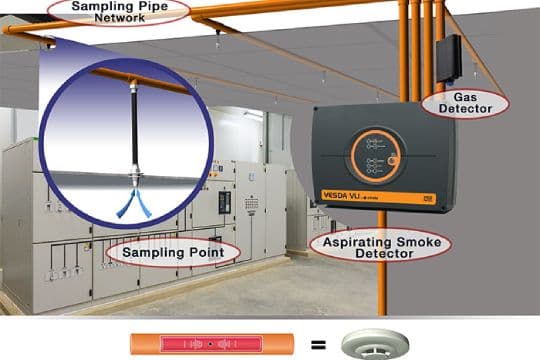
Aspirating smoke detection is a technology that utilizes a centralized detector that continuously draws air into the detector from a sampling pipe network located within the protected area — offering very early warning in critical or high-airflow environments.
Our Pune-based engineers will assess your requirements and provide a detailed quote.